A Wife’s Phone
Play A Wife’s Phone
A Wife’s Phone Screenshots




A Wife’s Phone review
Exploring the narrative, mechanics, and player experience of A Wife’s Phone
A Wife’s Phone is an interactive narrative experience that casts the player as someone exploring the mobile device of a married woman, using messages, photos, and apps to piece together a personal story and its secrets. This article dives into the game’s premise, how it plays, what choices and emotional beats to expect, and practical advice for navigating its narrative moments. I’ll share personal impressions, gameplay tips, and a short case study of a playthrough that highlights how discoveries shape the experience.
What Is A Wife’s Phone? — Story and Themes
So, you’ve picked up A Wife’s Phone, tapped the icon, and now you’re staring at a lock screen that isn’t yours. 😶 The immediate, almost intimate sense of intrusion is the entire point. This isn’t a game about jumping or shooting; it’s a interactive narrative game phone experience where the primary controller is your curiosity, and the entire world exists within the screen of a smartphone belonging to someone you’re supposed to know better than anyone. Let’s dive into the heart of this digital drama: the A Wife’s Phone story, its intricate narrative design, and the powerful themes it explores.
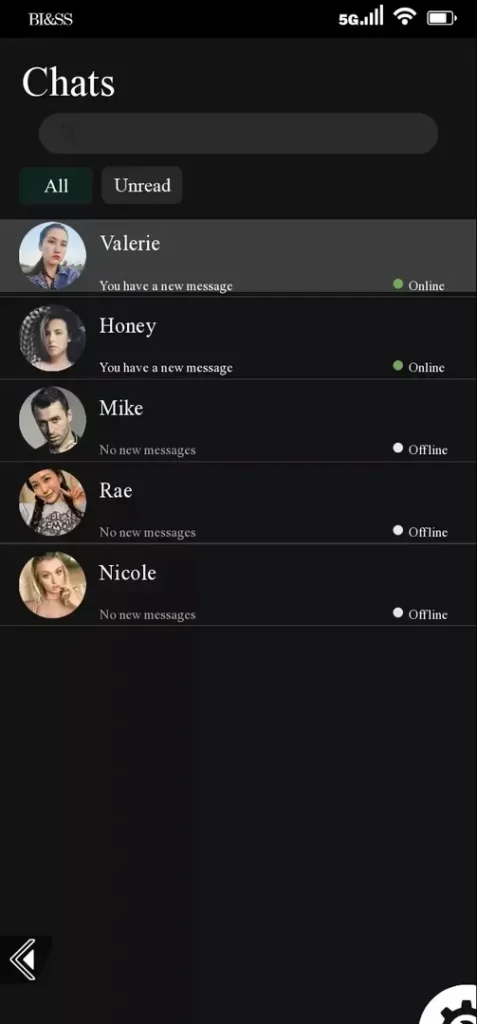
You take on the role of a spouse who, driven by suspicion, grief, or simple chance, has access to your partner’s device. Your tool for discovery is the phone’s interface itself. The A Wife’s Phone narrative isn’t delivered through cutscenes or lengthy dialogue boxes. Instead, it’s buried in the digital ephemera of daily life: a fragmented mosaic of text threads, photo albums brimming with unspoken contexts, calendar appointments with vague titles, and social media posts crafted for a public eye. Your job is to be a digital archaeologist, piecing together the truth—or a version of it—from these artifacts.
Message from “M”: “Don’t worry about it. Deleted the thread. He’ll never have to know.”
A line like that, cold and clinical on its own, explodes with meaning once you find the matching photo or the suspiciously empty spot in the call log. This is the genius of the game’s design. Every notification, every half-finished note app entry, and every emoji in a text conversation is a potential clue. The story unfolds in real-time through these interactive narrative elements, making you an active participant in the uncovering, not just a passive observer. You decide what to tap, what to read first, and what connections to make.
Core premise and narrative design
At its core, A Wife’s Phone is a masterclass in environmental storytelling, but the environment is a fully functional (though fictional) smartphone OS. 🧩 The core premise is deceptively simple: explore this device to understand its owner and the life she leads, which may be startlingly different from the one you thought you knew. The narrative design rejects traditional plot structure. There is no linear path from A to B. Instead, the story emerges laterally, through juxtaposition and inference.
Think of it as a visual novel-like simulation, but one where the “novel” is written across a dozen different apps. A loving goodnight text from you to her might sit in her messages alongside a much older, flirtatious thread with an unknown number. A calendar entry for a “dentist appointment” might coincide with a geotagged photo from a park across town. The game doesn’t highlight these contradictions with flashing lights or ominous music; it trusts you to notice them. The emotional weight comes from the quiet, dreadful click in your own mind when pieces fit together.
This design creates a uniquely personal A Wife’s Phone story for every player. The order in which you discover things—seeing a damning photo before reading the innocent explanation for it, or vice versa—profoundly shapes your interpretation of events and characters. I remember one playthrough where I’d pigeonholed a side character as purely antagonistic based on some early, shady texts. Then, much later, I stumbled upon a buried album of old college photos. Among them was a picture of my wife and this person, arms slung around each other, laughing with a carefree joy I hadn’t seen in years. That single artifact didn’t erase the suspicious messages, but it reframed them entirely, painting a picture of a complex, long-term relationship fraught with history and unspoken tensions. It changed the story from a simple mystery to a tragic study of how people grow apart. That’s the power of its non-linear narrative.
Major themes: trust, secrecy, and perspective
If the phone is the stage, then the A Wife’s Phone themes are the actors, delivering a powerful performance about the fragile architecture of human relationships. 🎭 The most prominent theme is, without question, trust. The game is essentially a stress test for trust. You are actively violating it by snooping, yet the very act of playing suggests that trust has already been eroded. Every benign message you read from a coworker becomes a test: Do I take this at face value, or is there a subtext I’m missing? The game brilliantly makes you complicit, blurring the line between seeking truth and violating privacy.
This ties directly into secrecy. The phone is a modern Pandora’s Box, the default repository for our hidden selves. The game explores the nature of secrets: are they necessarily malicious, or are they sometimes protective? You might discover secrets about a medical scare she kept to herself to avoid worrying you, or a hidden hobby she felt embarrassed about. These moments challenge the player’s motivation. Is your invasion justified by what you find, or does the act of looking itself become the greater betrayal? The moral ambiguity here is thick and unresolved, leaving you to sit with your own decisions.
Finally, the game is a profound exercise in perspective. You are seeing one person’s life entirely through her own digital footprint and through the messages others send to her. You never see your own character’s texts to her unless she’s saved them or they’re visible in her message history. This creates a staggering asymmetry. You are constructing a narrative from a single, curated point of view. It forces you to ask: What is missing? What would her husband’s phone show? The truth in A Wife’s Phone is never an objective fact; it is a collage of subjective experiences, and you are holding only one piece of it.
Tone, pacing, and emotional impact
The tone and pacing of A Wife’s Phone are what transform it from a clever concept into an emotionally resonant experience. This is a slow-burn discovery. 🕯️ There are no zombie chases or time-limited puzzles. The pacing is deliberate, almost contemplative, mimicking the real, often nerve-wracking experience of scrolling through someone’s private life. The tension isn’t screamed; it’s whispered in the three dots indicating someone is typing, in the “read receipt” on a message you weren’t supposed to see, and in the ominous gap in a conversation history where messages have clearly been deleted.
The emotional impact is cumulative. It’s built from a hundred small moments: a photo of a shared happy memory, a note-to-self with a worried question, a dry exchange with a relative that hints at familial pressure. A single text message might seem trivial, but when viewed as part of a pattern over weeks or months, it becomes devastating. The game makes you feel the weight of intimacy and the chill of distance using the same tools: the smartphone in your hands.
Because of this, your approach matters. To get the most from the A Wife’s Phone story, I strongly recommend:
- Read everything carefully. Skimming a calendar entry or missing the timestamp on a photo can cause you to overlook a crucial narrative connection.
- Take notes, physically or mentally. Jotting down names, dates, and inconsistencies will help you build a clearer picture and spot the game’s subtle storytelling.
- Revisit items. A text message takes on new meaning after you’ve seen a photo from that same day. Don’t be afraid to go back through old info with fresh eyes.
- Prepare emotionally. This game deals with mature, potentially distressing themes of relationship dynamics, infidelity, deception, and personal anxiety. It’s designed to provoke discomfort and deep thought. Please engage with it when you’re in a headspace to handle that.
To help you manage your time and expectations, here’s a quick look at how the pacing feels across different play styles:
| Play Style | Expected Time | Pacing & Experience |
|---|---|---|
| Quick Session | 30-60 mins | Focused on a single app or date range. Can feel tense and targeted, like a specific investigation, but you’ll miss the broader narrative tapestry. |
| Deep-Play Session | 2-4 hours | Allows for full immersion. The slow-burn pacing shines, letting connections simmer and the emotional weight build gradually. This is the recommended way to experience the full explore phone game story. |
The A Wife’s Phone narrative ultimately leaves you with more questions than answers, not about plot, but about your own judgments and the hidden layers in the people closest to you. It holds up a dark mirror to our digital lives and asks us to consider the cost of truly knowing someone—and the cost of the secrets we keep to protect them, or ourselves.
So, as you unlock that phone and begin your exploration, ask yourself this: When you find a piece of ambiguous evidence—a late-night call, a deleted chat—what will you choose to believe? And more importantly, what does that choice say about you? 🤔
A Wife’s Phone offers a focused, immersive narrative experience that uses the familiar interface of a smartphone to tell a layered story about relationships, secrecy, and perspective. Approaching the game with patience, careful note-taking, and awareness of emotional reactions will deepen the experience. Engage with community resources judiciously to avoid spoilers, obtain the game legally to protect your device, and consider replaying with different assumptions to reveal new nuances. If you enjoyed this guide, try a careful playthrough using the note-taking methods suggested and share your interpretations with a spoiler-aware community.